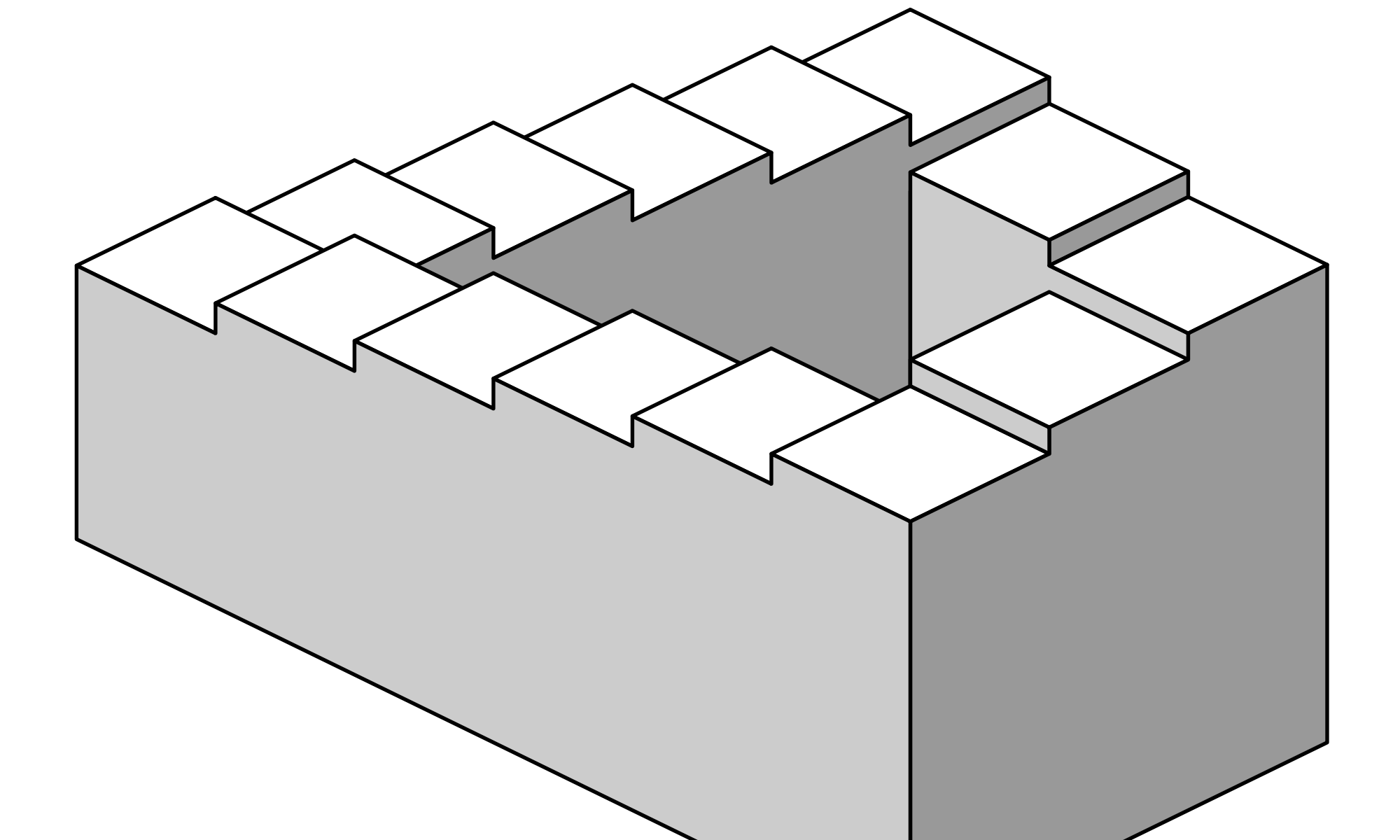
In N.K. Jemisin’s work we see an earth twice (if not more times — remember, much of history is unwritten) shattered; once torn apart by the mysterious loss of the moon, once fragmented by Alabaster’s explosive and revolutionary orogeny. In both cases, the shattering acts as a catalyst, as an end of on era: in the first case as an end to that stability which allows humanity to flourish (perhaps too much?) and a beginning of that chaotic existence which destroys society after society; in the second, the shattering is an end to the oppressive Sanzed regime and the beginning of some (thus far unknown) new world. We can make geological and environmental connections galore in this world of unreliable, yet controllable, earth, but after stumbling upon a specific quote from Toni Morrison I have been mainly entranced by the myriad of metaphorical connotations this shattering embodies. Continue reading “Slavery Broke the World”
Parallel Fulcrums
I made a very interesting and unintentional connection a few weeks ago between Jemisin’s work and the occurrences in my every day life; I forgot about this connection (in the moment I didn’t even think to write it down, ugh!), but it came back into my mind when I was reading The Obelisk Gate and was grappling with the many questions that encompassed my overall thought of “what the rust is going on?!”. Continue reading “Parallel Fulcrums”
Sankofa and Regwo
Ever since my first introduction to Sankofa —both as a symbol and a term—roughly 2 years ago, the implications behind its meaning has always taken precedence in my mind. Reading Jemisin has allowed me to revisit this belief and presented a different outlook on how it can be applied. By creating a world that struggles with confronting the truth of their histories, Jemisin tells a story of the ease in forgetting parts of the past. One way to address the (hauntingly familiar) effects of this neglect is through considering the Regwo race, otherwise known as lorists. Continue reading “Sankofa and Regwo”
The Beginning of Utter Confusion
The Beginning of Utter Confusion
On the first day of our English class and I was very excited to delve into the trilogy series we were required to purchase. Surprisingly, although it was only the syllabus day, I came out of class thinkING about the ways in which it was structured.
Power of Lore
After watching a part of the “1933 Master’s Race” episode of People’s Century, I became increasingly aware of the parallel between the propaganda of Nazi Germany and the stonelore of The Broken Earth trilogy. Continue reading “Power of Lore”
Environmental Doubt?
I suppose I could say that this question grew within my odd mind during class today, and perhaps for good reason. The instance of highly examining the environment and that of other social conflicts and or issues is a spurning obstacle that, as a society, I’m sure we manage to overcome with time and through enough effort. With that said, would it be fair for those who hesitate or distance themselves from such activities hold a sense of doubt?
The same doubt that may question oneself to the extent of how capable their contribution via thinking more carefully about their ecological footprint, speaking their mind in regards to social and or political views? Can the same even be said for those many people who hesitate or neglect the thought of voting (myself included)? Would it be fair to consider that the very ambiance of doubt can bring about uncertainty towards their contemporaries and general environments that they altogether ignore the concept of reminding people that they exist? That their substance is just as valid and as important?
This includes reusing material and throwing trash in their respective bins and actually knowing (and caring) if it’s the right place to put it? Of course, I may be thinking too deeply on this subject but could it be something that any of you – or anyone you may know have struggled with?
Adjusting thoughts on Jemisin’s humans
I had made a previous post about the alternate biology that Jemisin writes about. At that time I was still unaware of the existence of magic or magical essence as well as poorly stating that I was assuming that the people of Jemisin’s world look and act according to Earth humans. I’d like to re-examine the concept of alternate biology, but feel that it would be a more fruitful to start asking about science and magic’s coexistence.
My previous post made the assumption that orogeny was a gift/curse given to children by an unknown power. This gift/curse is passed down by means of the Fulcrum’s breeding program or accidently when a family line is either not entirely known and so produces a “feral.” I believe that I’ve faltered again in my comments on this power. I’d made the presumption that orogeny was a kind of training of how magic is dealt with though I now understand it to be independent from the magic that Jemisin introduced in The Obelisk Gate. It was interesting to think of it as a school of magic created by the Fulcrum to mask the presence of the real power of magic from the grits though this was not the case. Continue reading “Adjusting thoughts on Jemisin’s humans”
Literary Judge, Jury, and Executioner
From superhero comics to children shows like Danny Phantom, America’s science-fiction and entertainment industries have thrived on the idea of giving humans (or humanoids at least) supernatural powers for decades. This trope has enticed people for generations, probably because it gives its audience a chance to momentarily escape from their troubles or simply from the normality of reality. By becoming engrossed in a world that uses humans as its subjects/heroes, the audience has the opportunity to envision the fictional setting as an alternate universe in which (maybe in another life) they themselves could have had a chance to live in. Continue reading “Literary Judge, Jury, and Executioner”
On Democracy
Warning: this post talks about current politics.
Canning Food and Botulism
On Wednesday, October 3rd, I attended a Food Safety Talk podcast recording at the recommendation of Dr. McCoy. While I was there, the speakers answered a question about how long imperishable food can last and when we should be worried about it. This reminded me of Chapter 9 in N. K. Jemisin’s The Fifth Season where Alabaster gets poisoned by badly canned food and I was curious as to how accurate Jemisin’s description of faulty canning practices could be. Turns out, she likely did some research.
Continue reading “Canning Food and Botulism”