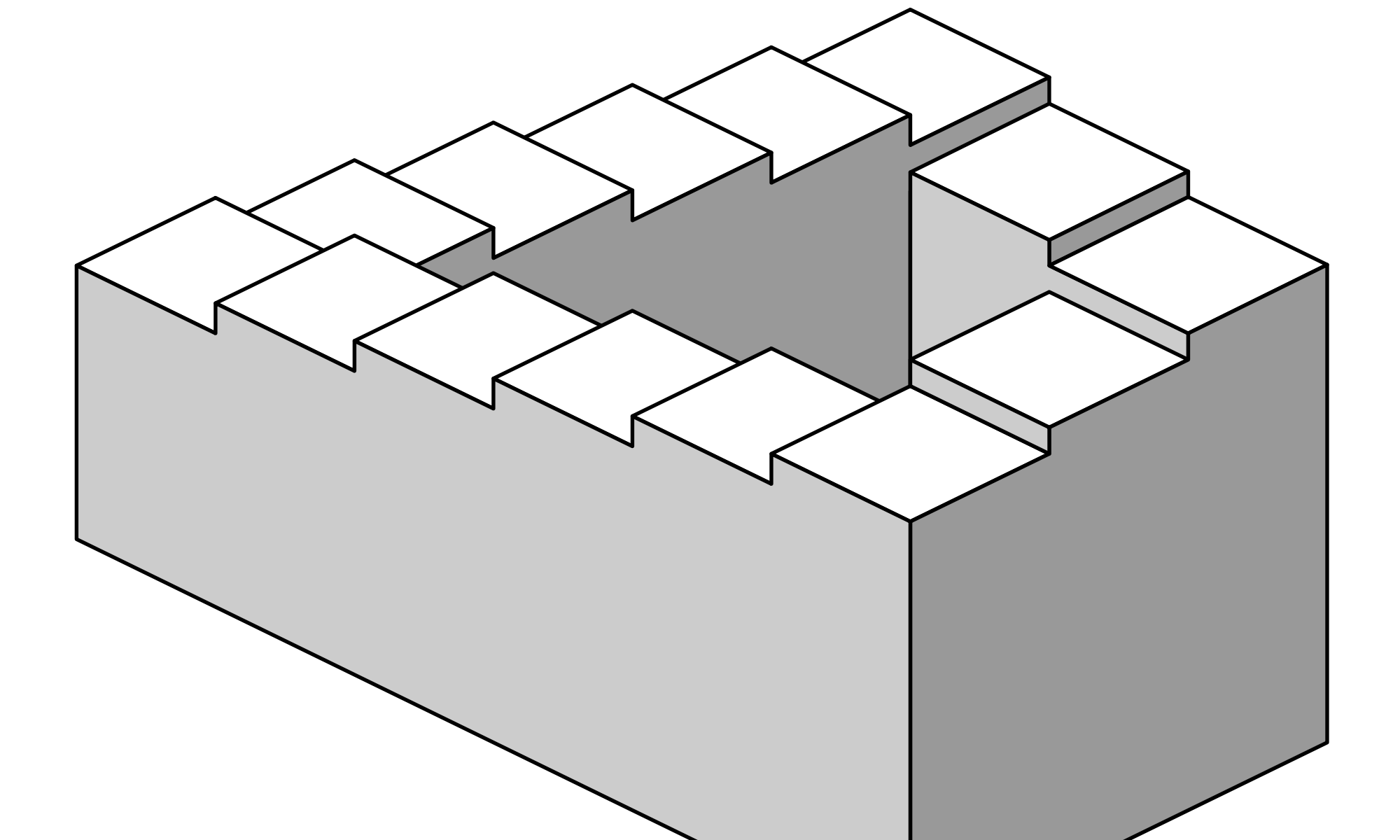
Nothing is ever truly correct; it is only statistically probable. The length of a ruler changes depending on what you use to measure it. Give ten people ten different measurement tools and you’ll get ten different lengths, with each being technically valid. In actuality, there’s an infinite number of correct lengths a ruler can be. Nothing is ever really true or absolute, especially when weighing the positives and negatives of an idea. This way of thinking, where right and wrong are not binary, but part of an ever-sliding scale, has restructured how I perceive complex issues like artificial intelligence and bodily autonomy, particularly as portrayed in Octavia Butler’s speculative fiction.
Both Butler’s Lilith’s Brood and the ongoing conversation around AI reveal the danger of moral absolutism. In Butler’s world, bodies are transformed for survival, sometimes without consent. In our world, minds are transformed by tools like AI, sometimes without resistance. At first glance, these transformations can feel threatening. But what if, instead of fearing these changes, we looked at them through a lens of curiosity, ambiguity, and possibility?
In Butler’s Dawn, the rejection of Jodahs and its siblings by humans, stands as a metaphor for how society responds to the unfamiliar or different. Jodahs, who is intersex and genetically part alien, is feared not because it has done harm, but because of what it represents: ambiguity, change, and the loss of control. Its body is not accepted by the humans who cling to binary gender roles and traditional human biology. Jodahs becomes the subject of bodily dysmorphia, not due to an internal confusion, but because of external rejection. As I battled with in my earlier essay, the disturbing question that defined my mental struggle was whether it is acceptable to remove someone’s choices even if you think you know what is best for them. Butler doesn’t answer this question cleanly, but she does force us to reckon with its complexity.
Lilith, too, undergoes violation disguised as salvation. She is kidnapped, repeatedly put to sleep and reawakened without her consent, forced into leadership, and eventually pressured into a cross-species relationship. The Oankali rationalize their actions as being for the good of humanity. This isn’t unlike how governments or corporations rationalize invasive data collection or surveillance, they tell us it’s for our own safety, for better service, or for optimization. The logic is disturbingly similar. Yet, as noted in my reflection, “Butler’s ability to show that the Oankali are creatures with different abilities and considerations… had me fully convinced they made the right decision.” This self-awareness that persuades the reader against their instincts, demonstrates how effective Butler is at flipping our sentiments on their head. And that’s where the power lies. In showing us how easily our moral compass can be manipulated under the guise of progress, safety, or logic, Butler prepares us to critically analyze our own world.
When I first encountered widespread AI tools like ChatGPT, my instinctual response mirrored the fear that haunts Butler’s humans: loss of autonomy, the erosion of individual agency, and a sense that something was being done to us rather than with us. However, much like Lilith’s evolving perception of the Oankali, my perspective on AI has changed over time. Through using AI, hearing peers discuss their experiences, and watching the technology evolve, I now understand its promise more clearly, and its risks more precisely. As argued in my original AI essay, artificial intelligence is neither inherently good nor bad; “it is neutral in itself… There are both positive and negative aspects to consider.” AI’s neutrality, however, doesn’t excuse us from responsibility. We shape its outcomes, much like the Oankali shape the future of humanity through choices that blend knowledge with ethics, and power with vulnerability.
AI’s most immediate benefit is its accessibility. For neurodivergent individuals, it can be life-changing. People with ADHD have reported doubling their productivity thanks to AI’s ability to help them organize thoughts, prepare for conversations, and manage time. This is not unlike the Oankali’s use of genetic tools to ‘enhance’ humanity, it’s a tool used to augment human capacity, to enable rather than replace. When I wrote about Ross, a person who uses AI to mask their neurodivergence, I highlighted one of AI’s greatest strengths: its capacity to accommodate differences that society has historically ignored or punished.
Similarly, the use of AI in medical diagnostics, especially for conditions poorly represented in standard datasets, such as dermatological conditions on dark skin, echoes the Oankali’s mission to preserve and improve life. The Journal of the American Academy of Dermatology reports that only about 10.3% of printed dermatological images represent dark skin tones, compared to over 28% in AI-powered online resources. AI has begun to correct this imbalance, filling a void left by traditional institutions. This is transformation not as erasure, but as repair.
Still, optimism has its limits. Just as the Oankali’s interventions led to a loss of human agency, overreliance on AI threatens to erode the intellectual struggles that foster learning and growth. This captures the paradox of optimization: the more efficient a tool becomes, the more tempting it is to surrender to it entirely. But growth is forged in struggle. In education, in creativity, and in relationships, our deepest developments come from challenge—not shortcuts. If AI becomes the default route to every answer, we risk dulling the edge of human thought. It’s the same fear Butler articulates when she strips humans of their choices in favor of survival. The question is not whether we can make things easier, but whether we should, and what we lose when we do.
Ultimately, what both Butler’s fiction and real-world AI demonstrate is the fallacy of binary thinking. As previously noted, nothing is really bad and nothing is really good in its entirety. This nuanced stance is crucial when engaging with large-scale transformations, whether technological or biological. Jodahs is not a monster. The Oankali are not saviors. AI is not the enemy. And humanity is not the hero. In this world of infinite “correct” answers, the goal isn’t certainty, it’s adaptability. Butler’s work teaches us that discomfort is not a signal to flee, but a signal to think. Similarly, AI’s emergence into our lives is not a death knell for humanity’s value, but a challenge for us to reassert that value in new ways.
Rather than asking whether AI will ‘take over,’ perhaps the more pressing question is: will we let it? Will we become like the humans in Dawn, paralyzed by our loss of power and unwilling to adapt? Or will we be like Lilith, who learns to navigate the in-between space, not because she agrees, but because she understands the stakes?
Butler has done so well in predicting issues that arise, I see my worries now on discrimination validated. However, this is also a positive because it gives us a space to provoke and consider our own thought processes. AI does the same. It stirs worry, but also reflection. It provokes, but also supports. To move forward, we must let go of the need for absolute judgments. We must embrace the ambiguity. Just as the ruler changes length based on the tool, our perspectives change based on the questions we dare to ask. This is not a flaw, it’s our greatest strength. The ability to question, adapt, and imagine a better path, even when the answers are uncertain, is what makes us human.