
Before walking into class I knew nothing about Dr. Mark Broomfield and what he teaches. All I knew was to wear comfortable clothes to move around in. Therefore, when I walked into class on April 1st, 2019, I was stunned. The classroom was turned into a dance studio. Dr. Broomfield instantly got to work with dancing. He wanted me and my fellow classmates to ground ourselves in the music, and connect with each other. First, we started off simple by following the beat of the music through the shuffling of our feet. At first, it was strange to see everyone dance. But, I took it upon myself to let loose and have fun. I treated it as if I was in a Zumba class and allowed the music to dictate my movements.
This is Not A Post
When Joe Cope came to our class to discuss the relationship between text, images, and power I was reminded of an image by Belgian artist Rene Magritte. This painting, titled “Treachery of Images” (see below) depicts the image of a pipe. Underneath the pipe French words are written and these words translate to, “This is not a pipe.” When I first learned about this painting, I didn’t think much of it. After all, art to me was always interpretational. No one can truly see an artist’s vision for their piece and as such viewers are often pushed to formulate their own analyses. In the case of this painting, viewers would have to decide whether to believe or understand what they are seeing or what they are reading. After going through Joe Cope’s lesson, I was able to make a little more sense of this dilemma as well as exemplify what we learned about in that class. Continue reading “This is Not A Post”
GE『N』ESEO: The Myriad of Navigating Geneseo’s Binaries [4]
The white snow was pelting the window and a cold chill ran throughout the house. I push myself deeper underneath the warm sheets as the movie Camp plays. The song “Right on Be Free” by the Voices of East Harlem played as snow closes off the windows. The line, “I’m gonna live until I’m dead” played in the background as I looked over a portrait. It was a portrait of someone my friend cared about. I frown; the person had died two years ago.
[Please, if you can, listen to the whole song. It is relevant to everything else I write about below.]
Continue reading “GE『N』ESEO: The Myriad of Navigating Geneseo’s Binaries [4]”
Sarah’s Take on An Open Discussion
Recently in class I was given the opportunity to participate in open discussion with my classmates. As usual, I found it so interesting to be able to bounce ideas off my peers, hearing their insight as well as their perspective on the topics that we learn about, both inside and outside of the class setting. One of the discussions we had I found particularly interesting, because it touched upon so many subjects. I was especially astounded as the fact that we started and ended the conversation in two completely different subjects, but these subjects were related in terms of the flow of conversation. I am going to share the main points of this discussion below, sharing my insight as well as my new findings and hopefully as you read you’ll gain a thing or two from the conversation. Continue reading “Sarah’s Take on An Open Discussion”
Community Through Artistic Collaboration
Before attending class on March 29th, 2019 I was excited. I knew that during class we were going to paint. Therefore, when Garth Freeman first began the lecture with other artists I was intrigued. Before taking this class I would have looked at art and thought how is that art? But now, with all the additional tools I have collected along the way, I was able to see why a certain person was an artist and try to interpret the work instead of looking at it.
Artist Intention
When viewing artwork, I tend to search for the artists’ message within the piece. In doing this, I neglect the thought of the process behind creating the piece. Garth Freeman helped me realize the importance of the creation process with the print activity done in class. Our class separated into groups and created prints, which is the first time I have done this. At first, I was not too excited for this activity because I do not think of myself as an artist. By the end of the class, I started to think more about how an artist gets to their final piece of artwork. Continue reading “Artist Intention”
DuBois and Sociology
I don’t like to admit when I’m struggling, but I have to say, I have been having a difficult time with The Souls of Black Folk recently. I didn’t realize that I was until we read “Of the Passing of the First Born;” part of the problem with reading the book both not in order and in a manner that breaks up the work into smaller chunks makes it difficult to grasp the work as a definitive whole, which is something I have been trying to do recently. While it is a collection of essays and thus some discrepancy in tone is expected it is still worth considering the work in its entirety; after all, DuBois chose to publish these essays together, not separately.
This past week, I sat down and actually thought about the work as a whole and the crux of my struggle with the tone of the work is this: certain chapters, such as “Of the Passing of the First Born,” are incredibly personal and the ways that the way that the Veil and Double Consciousness affect DuBois personally are so clear. However, some chapters are so deeply impersonal that they read more like an anthropological or sociological survey than a work that deals with fundamental societal issues that the author himself experiences. This divide makes it difficult to grasp the work in its totality, especially as the more anthropological sections come across as almost judgemental (more on this later). Continue reading “DuBois and Sociology”
Second Line Part 2
To further my Second Line discussion, I wanted to connect Steve Prince’s work culturally to New Orleans, in addition to the biblical references seen in Part 1. Continue reading “Second Line Part 2”
DAMN, That’s Important.
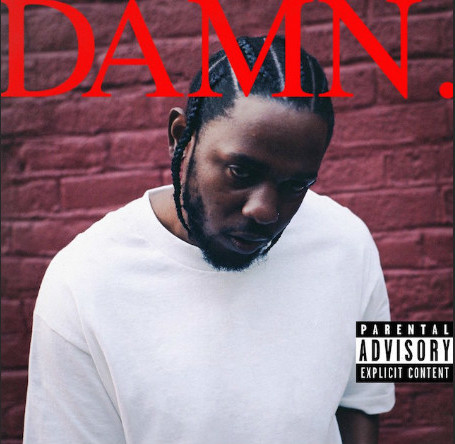
“Hail Mary, Jesus and Joseph/ The great American flag is wrapped and dragged with explosives/ Compulsive disorder, sons and daughters/ Barricaded blocks and borders/ Look what you taught us.”- Kendrick Lamar, DAMN, XXX
Last Friday, April 19th, our class was organized into different groups, all consisting from about four to five students each. We were asked to begin brainstorming a key, interdisciplinary term that would remain the focal point—or at least be the basis—for our self reflective essay. As we began THINKing and bouncing ideas off of each other, words quickly began soaring across the room from verbs “change” and “explore,” to terms like “nonlinearity,” “folk,” “organization” and my very own: self-autonomy. The idea behind my choice of word at first glance appeared simple: reclaiming something that might be seen as inherently negative by reconstructing the detrimental and harmful connotations attached to an idea, word or event by regenerating it into something dynamic, positive, powerful, and empowering. I automatically began thinking about the Baby Dolls in our required course text, Walking Raddy: The Baby Dolls of New Orleans, and how courageous and tenacious the women were in creating a space of their own to share in their community during the Jim Crow era. A space that would not only be their own, but an area in which they could unite through art, creativity, motion, self-individuality and self-expression. Building and embedding the word into my self-reflective essay however, was another story but at least the idea and thought was there, and that for me, was enough for now.
Science-Like a Fairytale and Modern Religion
I would have never compared fairy tales and myths to the natural sciences. It seems an unimaginable comparison to make, however, once putting some thought into it, it doesn’t seem like that far of a stretch.
Stories told orally, over time, tend to get more and more added to them overtime. Think about the game you played when you were younger, Telephone. When playing this game, through whispers and misinterpretations, some details can either be lost or added throughout the circle. If I said to you, in a whispered tone, “I love smart water”, it could be altered to “I love art water” or something else as the game goes on.
This helps me think about the comparison of fairy tales and science. Joe Moran compared these two things and I wasn’t sure I agreed with what he was saying, but after thinkingabout this for a while, I decided I agreed with his comparison. His comparison… Continue reading “Science-Like a Fairytale and Modern Religion”